Internal walls
Internal walls are the most important element of any interior. They are the ones that divide the house into functional rooms. Let's get acquainted with the technology of erecting partition walls.
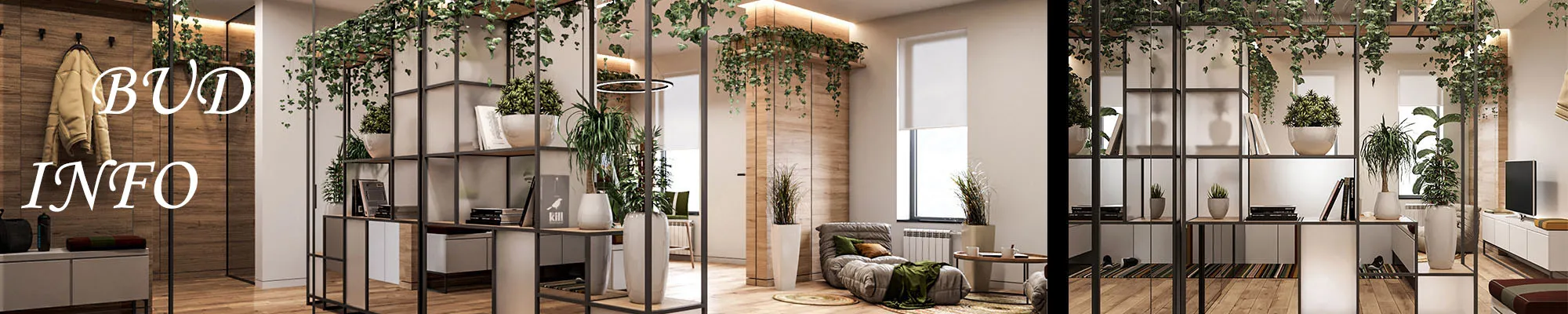
Until recently, interior walls were absolutely static elements. Now they can be movable and change the interior according to the whim of the homeowner. Partitions can also be transparent or translucent, which gives almost unlimited possibilities for their design and use.
There are quite a few options for constructing partition walls. The most popular method is to use plasterboard panels. Such walls are very easy to install and, if desired, to dismantle. Transparent and translucent interior walls, as well as partitions made of wood materials, are also in demand.
Load under control
When building partitions on upper floors and attics, it is necessary to take into account their weight and load. The weight of the walls will depend on the technology used, the type of material and its thickness. The differences are significant - one square meter of a 12 cm thick brick wall weighs about 230 kg, and plasterboard on an aluminum frame is 200 kg less. The maximum permissible load on the floor should be read at the design stage, otherwise the consequences can be most unexpected.
"Full" interior walls
Internal walls can be built from brick, concrete, aerated concrete, expanded clay concrete, etc. Such walls are very durable and have good soundproofing properties, but their disadvantages include heavy weight and "disposability". Indeed, if you want to change the layout of your home, you will have to spend a lot of effort and time.
Brick walls can be decoratively finished in many ways, but remember that if such partitions are located in a bathroom or kitchen, they will have to be additionally waterproofed.

Frame walls
Lightweight interior walls made of plasterboard have one significant difference from the partitions described above. They can be easily dismantled. Their construction does not require the help of professionals, because there is nothing complicated in their installation. Partitions made of plasterboard have good acoustic properties. Due to the lightweight design based on a frame made of aluminum profiles filled with mineral wool, plasterboard partitions retain heat well. In addition, many plasterboard panels are fireproof, and like all gypsum building materials, they improve the microclimate of the premises.
Wooden interior walls
Such partitions are made of wood, plywood or fiberboard. It is better to entrust their construction to an experienced carpenter, although you can also find self-assembly kits on the market. Like plasterboard partitions, wooden interior walls are assembled on the basis of a wooden frame and wood boards as cladding. The biggest advantage of this type of walls is their low weight. Wooden partitions should be considered only as interior decoration, as they have many disadvantages, in particular, very poor sound insulation and lack of resistance to moisture.
Glass block walls
Interior glass block walls have all the disadvantages of "solid" walls. They are heavy, require skilled construction, and are difficult to dismantle. However, they are extremely decorative and can be completely permeable to light. Glass blocks work well in rooms where more light is needed. However, using glass blocks does not mean that you have to limit your privacy. This type of building material can be opaque, painted in almost any color.